How Bird & Blend Turned £50 Market Pitches Into Repeat Online Customers
Short answer: Treat the market as a customer-acquisition test, not only a day's takings. Count relevant conversations, samples, first purchases, permission-based sign-ups and second orders over 60 days. Keep attending only when the combined contribution from market purchases and attributable repeat orders exceeds the pitch, travel, stock and labour cost, and when the channel teaches you something you can reuse.
A stall can look busy and still lose money. It can also make only a modest profit on the day yet create valuable repeat customers.
Most founders measure cash in the tin and ignore what happens next. That misses the main advantage of selling face to face: you can learn which customer, message and product lead to a purchase, then invite that buyer into a direct relationship.
The Bird & Blend decision
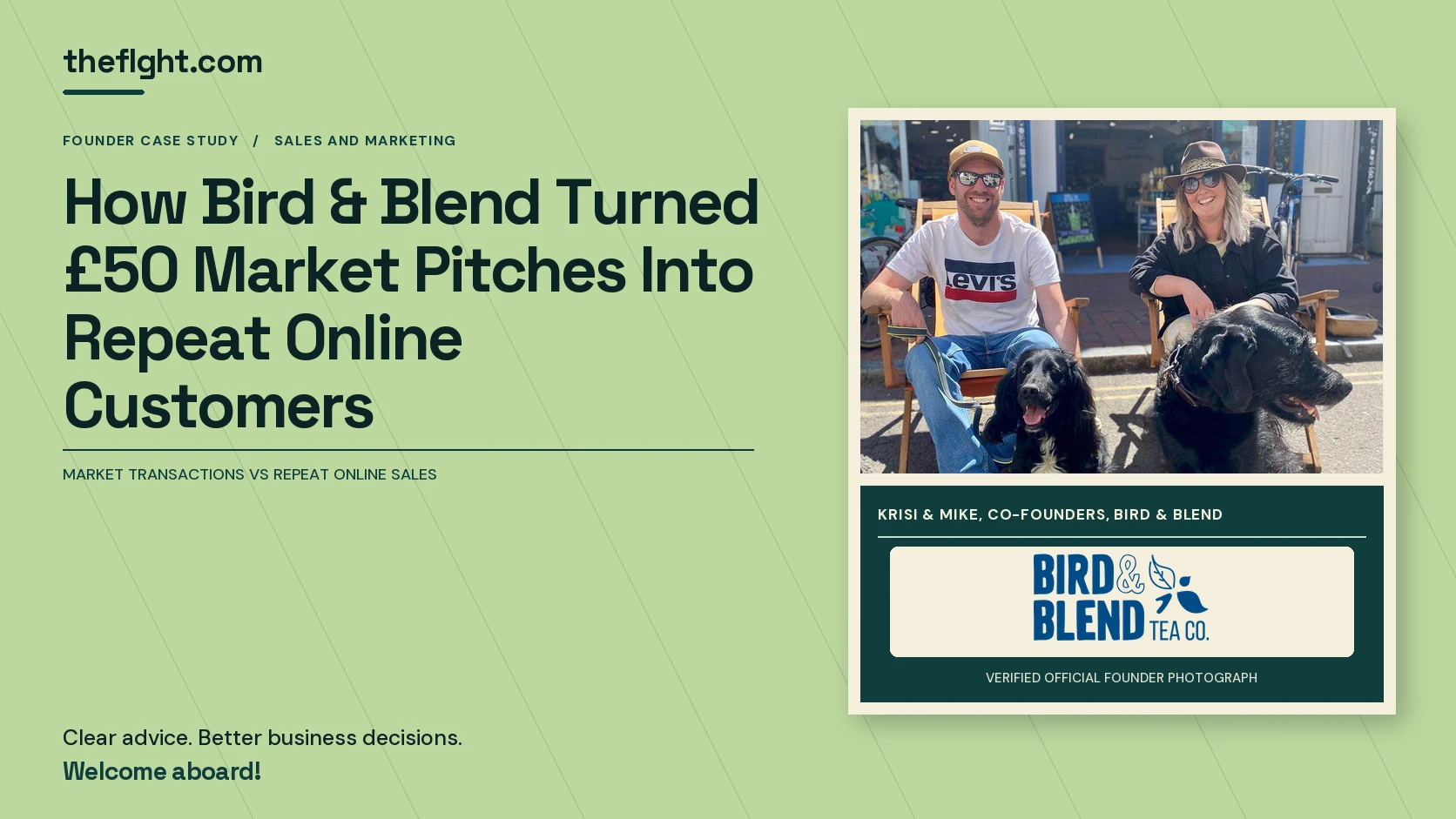
Bird & Blend co-founder Krisi Smith has described paying about £50 for market pitches, sampling tea throughout the day and inviting visitors to join an email list or private Facebook group. The markets served as selling, research and community-building channels, rather than isolated trading days. Customer-location data later helped the founders choose Brighton for their first shop, according to a detailed Shopify founder interview.
The company says it started from a bedroom and kitchen and built a community around tea, as its official story explains. Public accounts do not disclose the early funnel's precise footfall, sign-up rate or repeat contribution. Those figures need direct confirmation before anyone treats the case as a benchmark.
My position is that a market stall should rarely be judged as a miniature shop. For an early product business, its higher value is concentrated learning and identifiable customer acquisition. That only counts if you capture permission and follow through.
Use the Market-to-Repeat Chain
The Market-to-Repeat Chain links six observable events. A break tells you where the channel is failing.
| Link | What to record | What a weak result suggests | |---|---|---| | Relevant footfall | People who plausibly fit the customer | Wrong event, location or audience | | Sample | Qualified visitors who try the product | Weak display or invitation | | First purchase | Sampled visitors who buy | Product, price or pitch problem | | Permission | Buyers who actively join your list | No clear reason to stay connected | | Second order | Attributable online purchase within 60 days | Product disappointment or poor follow-up | | Third action | Another order, referral or event visit | Relationship has not become durable |
Do not estimate footfall from how tiring the day felt. Use a hand counter, tally sheet or point-of-sale record. Keep the method simple enough to use during busy periods.
Separate buyers from sign-ups
Someone accepting a sample is not a lead. Someone entering a prize draw may want the prize rather than the product. Record buyers and non-buyers separately, including which product and message drew each response.
Ask for email permission after delivering value, not as an entry toll. A buyer might want brewing advice, early access to a flavour or notice of your next local market. State what they will receive and how often. Consent and electronic-marketing rules vary by country. In the UK, check current requirements and obtain qualified advice where your method is uncertain.
Do not upload a list of card-paying customers into marketing messages without an appropriate lawful basis and clear information. A receipt relationship is not unlimited permission.
Give every market an attributable path
Use a market-specific code or landing address so later orders can be connected to the event. The code does not have to reduce price. It can identify the customer while offering a useful bundle, local collection or a named product page.
Record three time windows:
- Revenue and contribution on the market day.
- First online orders from those buyers within 30 days.
- Further orders or referrals within 60 days.
Attribution will remain imperfect. A customer may buy later through search without using the code. Ask one checkout question, such as where they first met the business, and compare it with your recorded list. Do not claim every sale in the postcode came from the stall.
Measure contribution, not revenue
Revenue can make an event appear healthier than it is. Subtract product cost, card fees, sampling stock, pitch fee, travel, packing and paid labour. Then add contribution from attributable repeat orders.
Founder time also has a cost, even when you do not yet pay yourself. Record the hours separately and calculate both cash contribution and contribution after a reasonable owner-hour allowance. Otherwise a £120 surplus from a 12-hour day may look attractive when it is not.
Worked example: Harbour Leaf Tea
Harbour Leaf Tea takes a £52 pitch at a Saturday food market. These illustrative figures show why repeat behaviour changes the decision.
| Market-day item | Calculation | Amount | |---|---:|---:| | Revenue | 42 purchases × £8.50 | £357.00 | | Product cost | 42 × £2.35 | £98.70 | | Card fees | indicative total | £8.50 | | Samples and cups | 140 × £0.18 | £25.20 | | Pitch and travel | £52 + £18 | £70.00 | | Cash contribution | £357 - £98.70 - £8.50 - £25.20 - £70 | £154.60 |
The founder and one paid helper spend eight hours each. Budget the helper at an illustrative £16 loaded hourly cost, or £128, covering lawful pay and applicable employer costs. Check current UK minimum-pay rules and local employment obligations. Cash contribution falls to £26.60. Valuing eight founder hours at £18 makes the event £117.40 negative after owner time.
However, 31 of the 42 buyers actively join the list. Within 60 days, nine place an online order averaging £24. Online product and fulfilment costs average £12.20 per order, with £0.75 in payment fees.
Repeat-order contribution is 9 × (£24 - £12.20 - £0.75) = £99.45.
Total 60-day contribution after founder time is £26.60 + £99.45 - £144 = -£17.95. Even with repeat orders, the market fails to pay for the owner hours. The chain still identifies where to test improvement:
| Conversion | Calculation | Result | |---|---:|---:| | Sample to purchase | 42 ÷ 140 | 30.0% | | Buyer to permission | 31 ÷ 42 | 73.8% | | Permission to second order | 9 ÷ 31 | 29.0% |
Harbour Leaf should not commit to a season. One capped retest could examine higher transaction value or fewer staffing hours without weaker sampling. Continue only if the revised channel pays for owner time; repeat orders have not yet made it viable.
Use conversations as structured research
Write down repeated questions and objections immediately after each market. Do not rely on memory at the end of the month. Note the customer's words, the product involved and whether the conversation ended in a purchase.
Look for patterns that affect a decision: buyers repeatedly asking for caffeine-free options, confusion about brewing quantity, or strong demand from one postcode. Avoid redesigning the range from one forceful opinion. Require the same signal across at least three events or combine it with purchase data.
Bird & Blend's use of geographic customer data is especially useful. A future shop should not be chosen because one event felt friendly. Compare customer density, repeat revenue, travel behaviour, rent and local competition.
Build the first follow-up around the purchase
Send the receipt or promised information promptly. Within two working days, follow with one useful message tied to the product bought: preparation instructions, storage or a compatible choice. Ask one answerable question about the experience.
Do not send a barrage of generic promotions. Your aim is to help the customer use the first purchase successfully, because consumption precedes replenishment. Schedule a reorder prompt around realistic usage. A 20-cup tea pouch does not need a reminder the next morning.
When the customer orders again, record contribution, not just order value. Free postage or a discount can manufacture a second order that loses money.
Decide whether to repeat, change or leave the market
Set a minimum before booking a series. For example, require a positive 60-day contribution after paid labour, at least 20 permission-based buyer contacts and a second-order rate worth retesting. These are internal thresholds, not universal benchmarks.
Leave an event if its audience is wrong even when takings cover the pitch. Change the stall when relevant people stop before sampling but do not understand the offer. Change product or price when sampling is high and buying is consistently low. Improve follow-up when first purchases are healthy but second orders are absent.
What to do over the next 60 days
This week, choose one market whose visitors match your intended customer. Define the chain, prepare a tally method and create an attributable follow-up path. Cost one sale and one sample before paying the pitch fee.
At the event, record each link without slowing service. Send the promised follow-up within two working days. Review first-order feedback at day seven, online conversion at day 30 and total contribution at day 60.
Run no more than three comparable events before deciding. Continue only when the economics and learning justify the founder hours. A market calendar is not a strategy. It is a series of measured acquisition tests.
Related guides
Frequently asked questions
Should I ask every market visitor for an email address?
No. Ask people who have shown relevant interest, and give them a clear reason to hear from you. A smaller list of buyers and serious non-buyers is more useful than hundreds of prize entrants. Explain the type and frequency of messages, record consent properly and make leaving straightforward. Marketing and privacy requirements vary by jurisdiction, channel and customer type. In the UK, check current electronic-marketing and data-protection rules and seek qualified advice where necessary. The commercial test is also simple: if you cannot describe the future value in one sentence, the visitor has little reason to subscribe.
What is a good conversion rate from samples to purchases?
There is no reliable universal rate because product price, event audience, weather, sampling method and purchase urgency differ. Establish your own baseline across at least three comparable events. Segment relevant samples from casual footfall and count retained purchases, not just transactions later refunded. The useful question is whether improvement changes contribution. Moving from 20% to 25% may still be poor if each sale loses money, while 12% could work for a high-contribution product. Use an indicative target only as a test hypothesis, then replace it with your observed figures.
Should I offer a discount for the second online order?
Only when the discount tests a specific uncertainty and leaves acceptable contribution. A blanket code can train buyers to wait and can make a weak repeat proposition look healthy. Try a product-use message or convenient replenishment bundle first. If you test a discount, create a control group where practical and compare total contribution, not redemption alone. Include postage, packing and payment fees. A £5 reduction that generates many £18 orders may destroy the margin you hoped repeat buying would create. Stop the offer if discounted customers do not return at the normal price.
How quickly should I contact someone after a market?
Send whatever you promised within two working days, while the interaction is still recognisable. The first message should help with the product or answer a common buying question, not simply demand another order. Time the next contact to likely usage. A perishable weekly product and a three-month supply require different schedules. Monitor complaints and unsubscribes as well as clicks. Fast follow-up cannot repair a poor product experience, so invite a short response and resolve defects before selling again. Keep the cadence you stated when the person joined.
Can market data tell me where to open a shop?
It can provide one input, not the full decision. Customer postcodes, repeat orders and willingness to travel show where demand clusters. A shop also needs sufficient footfall, affordable occupancy cost, suitable access, staffing and a realistic break-even volume. Compare several locations and count how much current online revenue might merely move into the shop. Seasonal market customers may not support year-round rent. Before signing a lease, test temporary trading days or a short licence where possible. Property, planning, food and employment requirements vary, so take qualified local advice.
What if a market is profitable but produces no repeat customers?
Keep it only if the same-day contribution justifies the time and fits your operating priorities. Some event audiences buy gifts or novelty products once, and that can still be a sound trading channel. Do not classify it as customer acquisition if buyers do not return. Price it as a standalone retail day, including founder labour, travel and unsold stock. You might also test whether repeat is naturally unlikely because the product lasts a long time. In that case, referrals, complementary purchases or wholesale leads may be the more relevant later actions to measure.
Comments (0)